

Sustainability · 2025
In this section52 topics
- Sustainability Policy2 items
- Sustainability Goals & UN SDGs3 items
- Policy Review3 items
- Business Value Chain1 item
- Stakeholder Analysis1 item
- Environmental Sustainability — Overview1 item
- Environmental Policy & Guidelines3 items
- Environmental Policy Review1 item
- Energy — Plan & Guidelines2 items
- Energy — Electricity Consumption1 item
- Energy — Fuel Consumption1 item
- Energy — Targets2 items
- Energy — Performance & Outcomes2 items
- Water — Plan & Guidelines2 items
- Water — Withdrawal, Discharge & Consumption2 items
- Water — Targets2 items
- Water — Performance & Outcomes2 items
- Waste — Plan & Guidelines2 items
- Waste — Generation, Disposal & Recycling1 item
- Waste — Targets2 items
- Waste — Performance & Outcomes2 items
- GHG — Plan & Guidelines2 items
- GHG — Emissions1 item
- GHG — Emissions Verification2 items
- GHG — Principles & Standards1 item
- GHG — Targets1 item
- GHG Targets — Other Targets1 item
- GHG — Performance & Outcomes2 items
- Environmental Legal Incidents1 item
- Other Environmental Management1 item
- Social Policy & Guidelines4 items
- Social Policy Review1 item
- Social — Principles & Standards Practised1 item
- Human Rights Due Diligence2 items
- Employees — Plan & Guidelines3 items
- Employees — Workforce1 item
- Employees — Remuneration & Provident Fund1 item
- Employees — Training & Development1 item
- Employees — Occupational Health & Safety1 item
- Employees — Labour Relations1 item
- Employees — Employee Representation2 items
- Employees — Targets2 items
- Employees — Performance & Outcomes2 items
- Customers — Plan & Guidelines3 items
- Customers — Satisfaction Results1 item
- Customers — Targets2 items
- Customers — Performance & Outcomes2 items
- Community & Social — Plan & Guidelines3 items
- Community & Social — Targets2 items
- Community & Social — Performance & Outcomes2 items
- Other Social Management1 item
- Law Violation Incidents1 item
Sustainability Policy
Has a Sustainability Policy
Yes
Policy Description
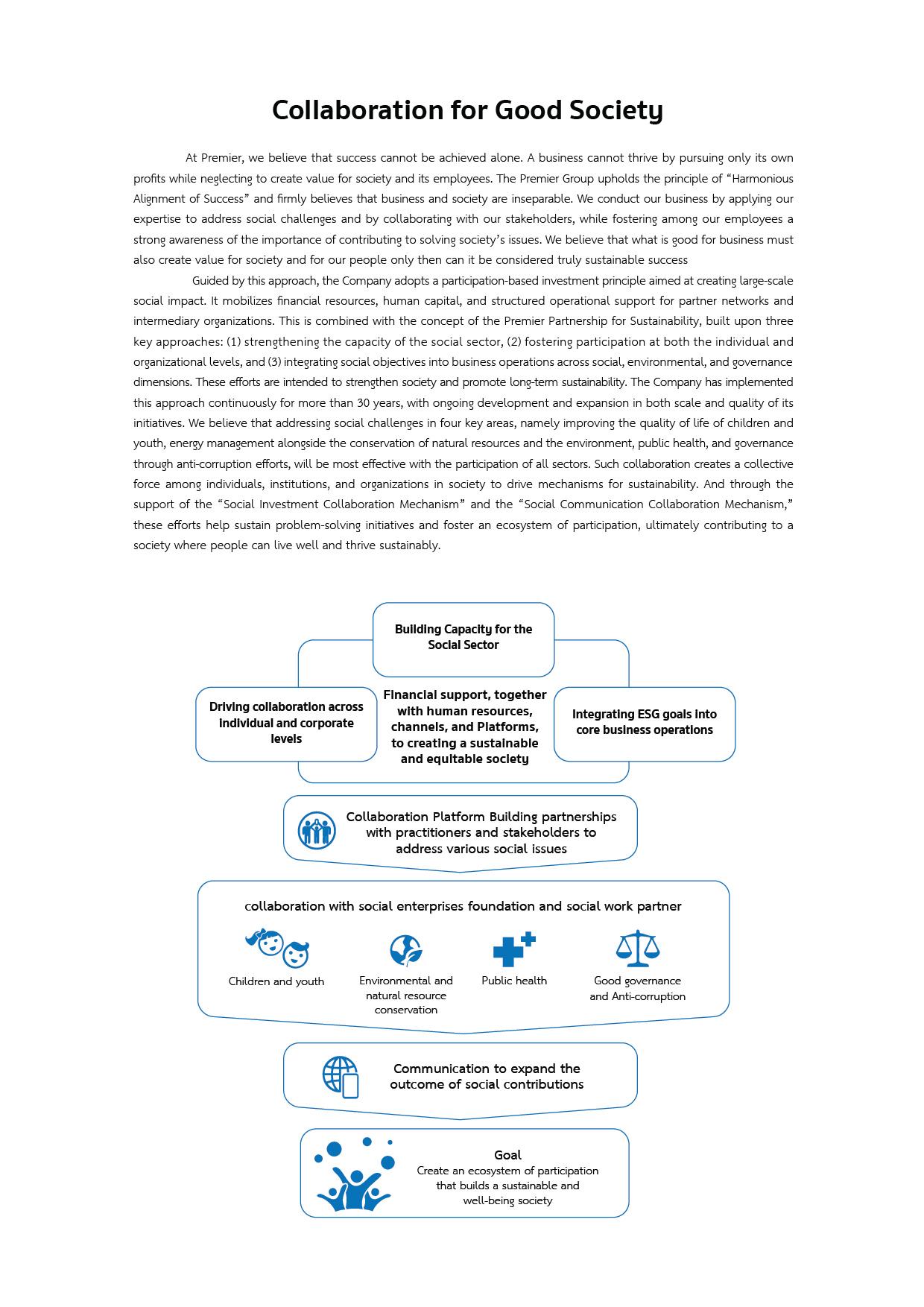
Disclaimer: The Company adheres to the principle of fostering participatory approach to create large-scale systematic collaboration. The disclosure of social outcomes is therefore not solely the result of the Company’s, but also the collaborative outcomes among networks and the public, with the target aims to large scale of the systematic change.
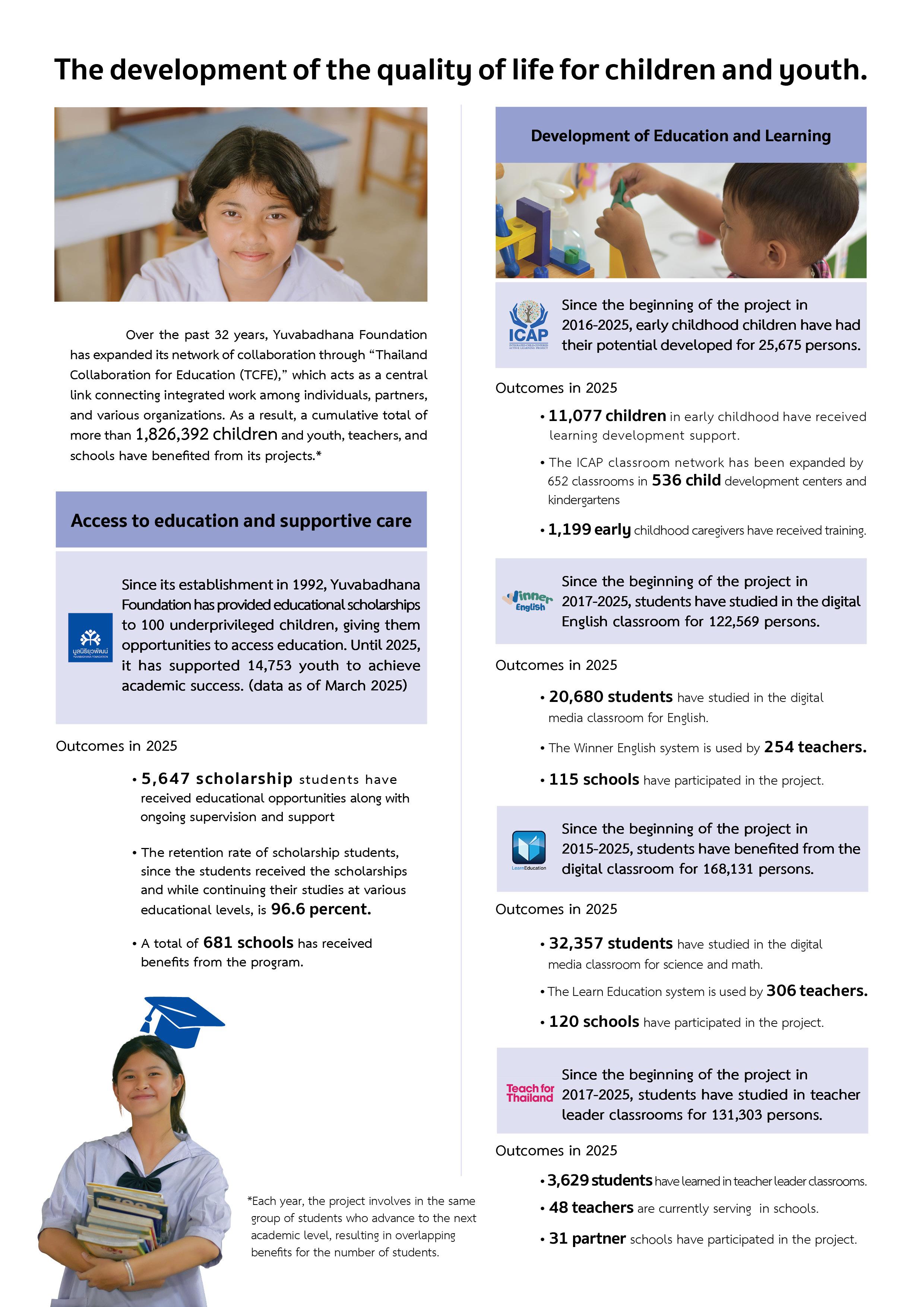
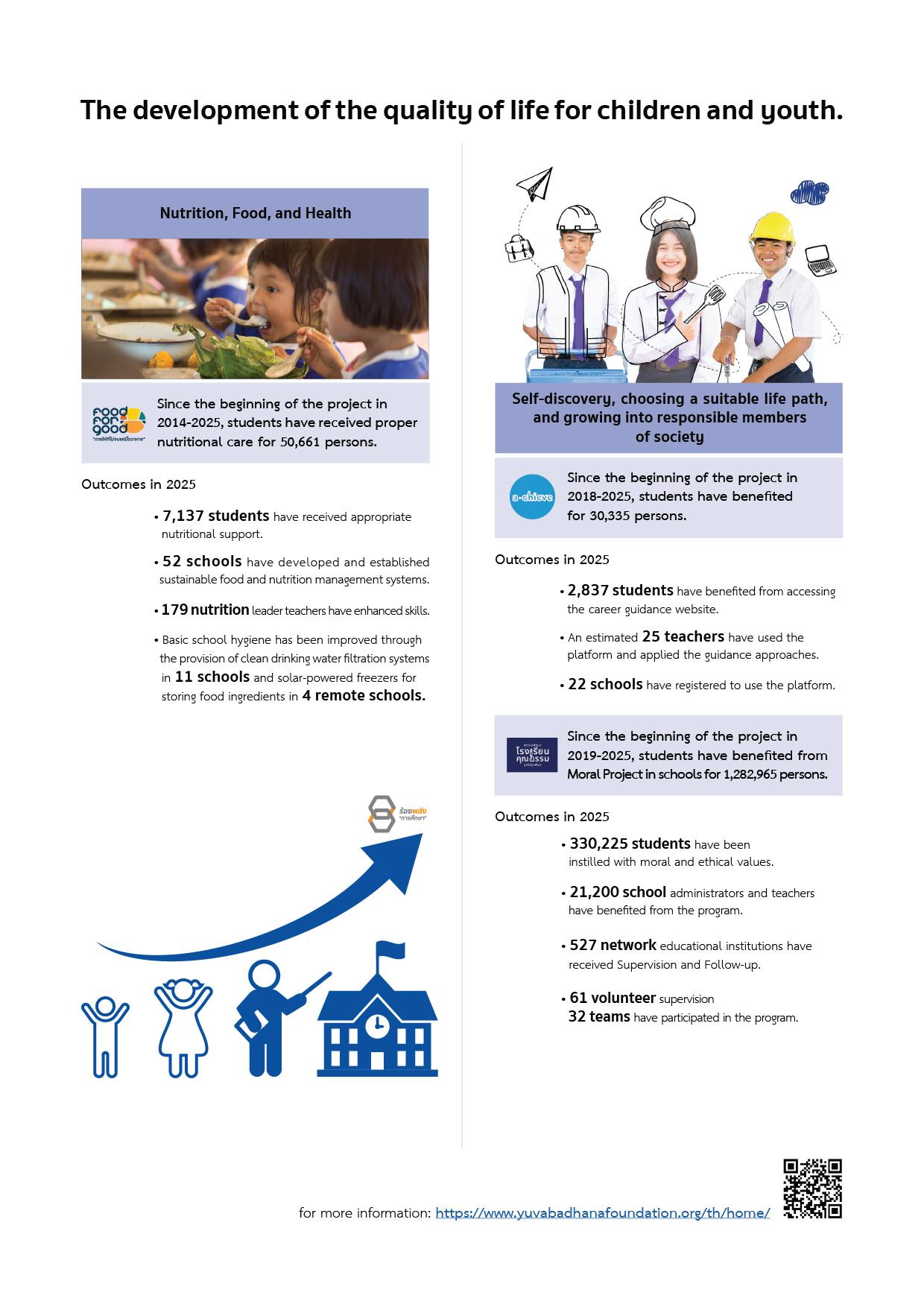
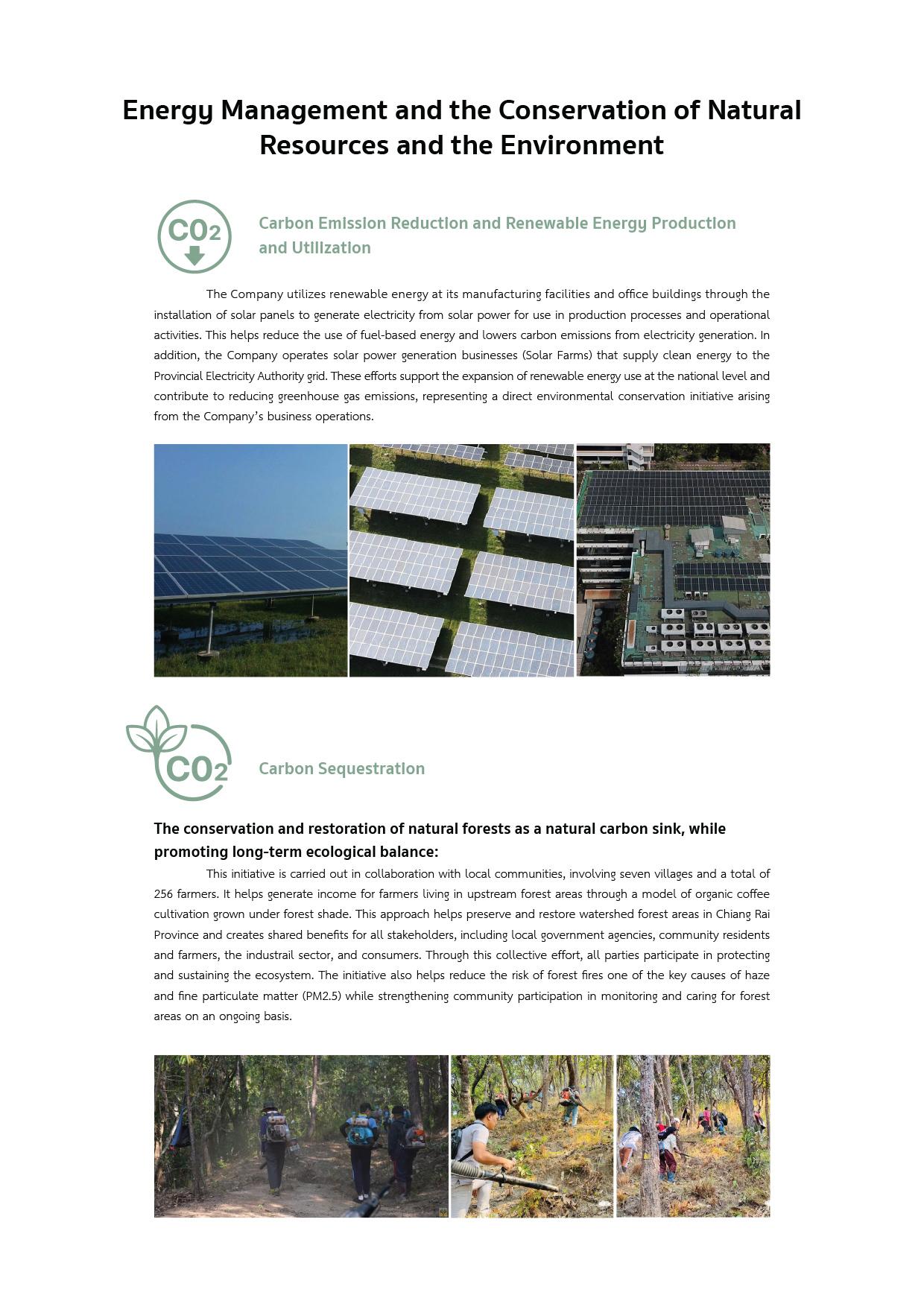
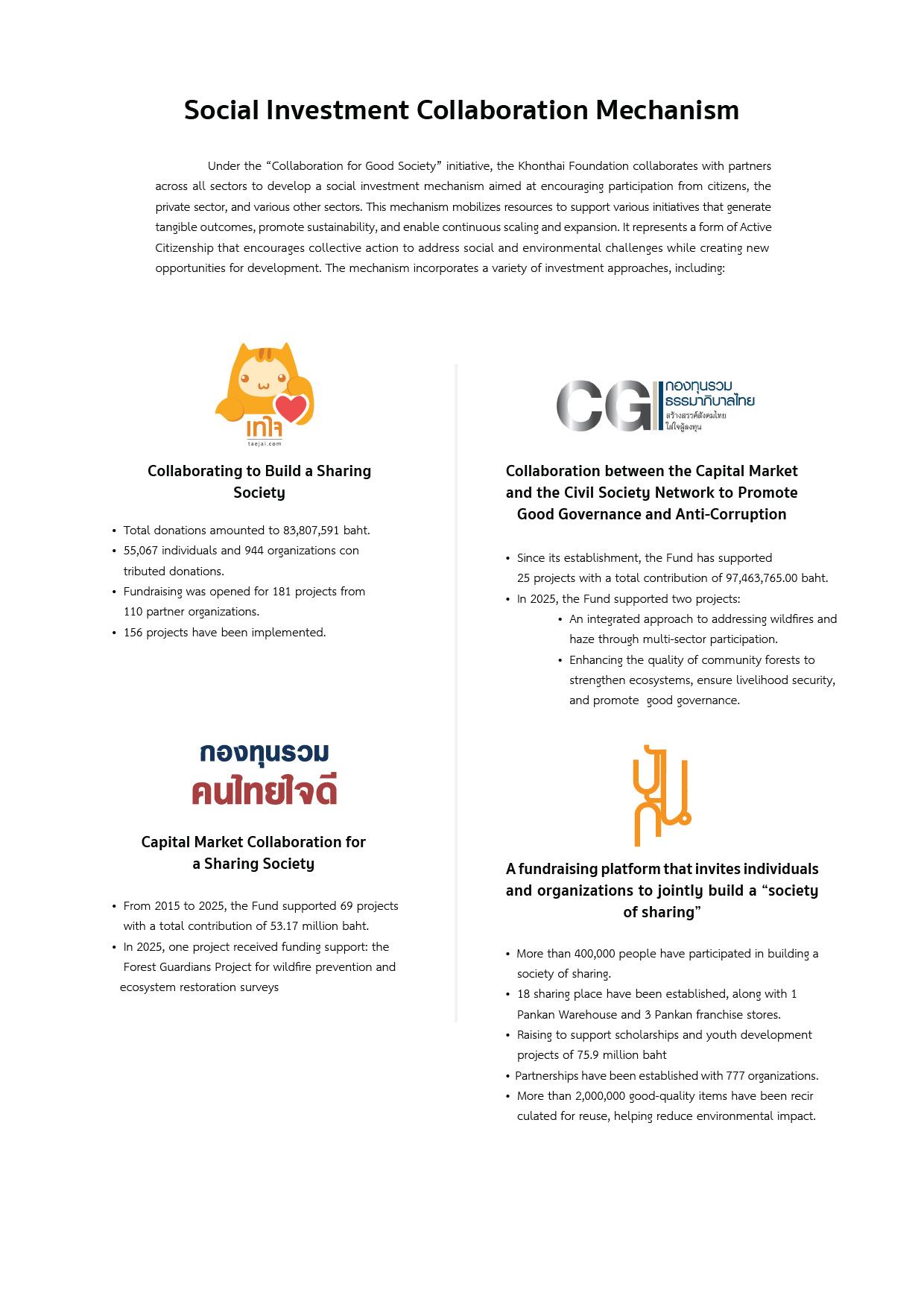
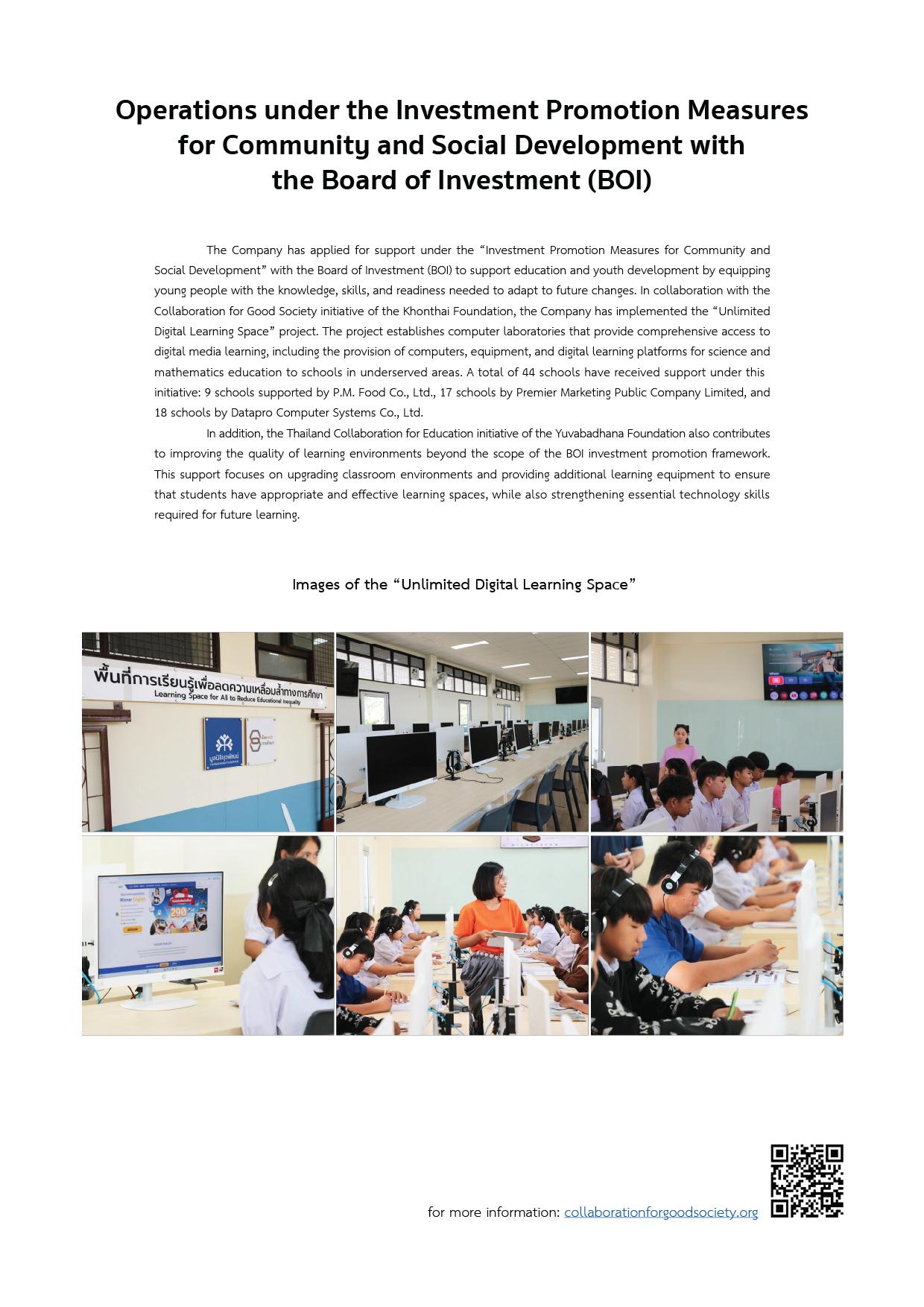
The Development and Expansion of Operational Efforts to Resolve Social Issues
Premier Products Public Company Limited and its subsidiaries integrate social development into their core operations by prioritizing sustainable quality of life and environmental stewardship. The Company upholds the goal of achieving “Harmonious Alignment of Success.” However, given the scale and complexity of modern social challenges, the Company recognizes that internal expertise and technological innovation alone cannot achieve systemic societal change. Addressing these issues effectively requires extensive collaboration and the strategic mobilization of external support. Thus, the Company and its subsidiaries actively participate in the Collaboration for Good Society initiative by mobilizing both financial resources and the specialized expertise of their human capital, in collaboration with diverse organizations and individuals. Through these efforts, the Company aims to contribute to large-scale systemic change in a continuous and sustainable manner.
Accordingly, the business development process creates value by integrating robust operational systems, securing deep insights into stakeholder requirements, and establishing shared objectives. This approach ensures that the design and development of all systems and products proactively mitigate social and environmental impacts. Furthermore, the Company maintains a strong commitment to community engagement, fostering quality of life alongside environmental preservation.
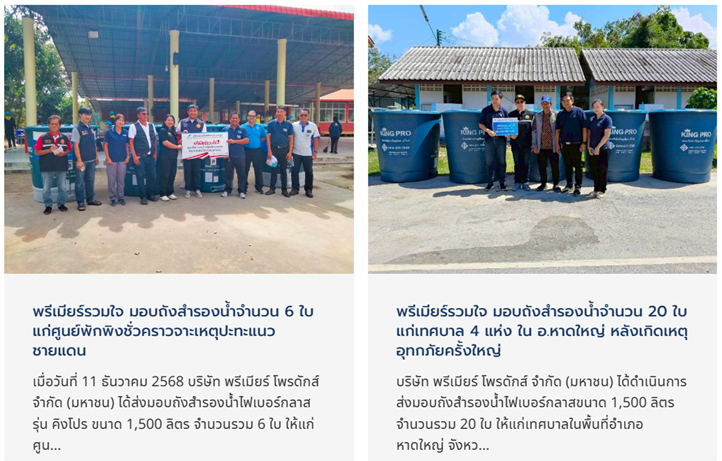
Employees are the primary drivers of the Company’s sustainable shared success. Leveraging its extensive expertise in water management systems, the Company is committed to addressing critical social challenges. In 2025, the Company and its subsidiaries prioritized fostering social responsibility across the workforce, notably by deploying water storage solutions to communities in crisis. These efforts included supporting areas with depleted water supplies following major floods and providing essential infrastructure to residents displaced by border conflicts. Furthermore, the Company empowers employees to contribute to social development through partnerships with foundations and multi-sector cooperatives. These initiatives focus on enhancing the quality of life and education for youth, combating child malnutrition, advancing environmental sustainability, and establishing participatory mechanisms for long-term societal progress.
Sustainability Goals & UN SDGs
Has Sustainability Goals
Yes
Goals Description
-
UN Sustainable Development Goals
| SDG Goal |
|---|
| Goal 5 Gender Equality |
| Goal 5 Gender Equality |
| Goal 6 Clean Water and Sanitation |
| Goal 6 Clean Water and Sanitation |
| Goal 7 Affordable and Clean Energy |
| Goal 7 Affordable and Clean Energy |
| Goal 9 Industry, Innovation and Infrastructure |
| Goal 9 Industry, Innovation and Infrastructure |
| Goal 13 Climate Action |
| Goal 13 Climate Action |
| Goal 17 Partnerships for the Goals |
| Goal 17 Partnerships for the Goals |
Policy Review
Policy Reviewed This Year
Yes
Policy Changed This Year
Yes
Review Details
-
Business Value Chain
Value Chain Description
The business value chain follows the concept of "Creating a sustainable quality of life and environment" that starts from the beginning to the downstream through the process of developing products that meet the highest needs for the lives of people in society, along with environmental conservation by taking into account the stakeholders in the activities involved at each step of the chain in delivering good value, as shown in the business value chain diagram below.
Stakeholder Analysis
Stakeholder Analysis
| Stakeholder Type | Stakeholders | Stakeholder Expectations | Response to Expectations | Communication Activities |
|---|---|---|---|---|
| External stakeholders | 2923 · Description: Customers | • Quality products and services to satisfy the customers
• Responding to customer needs
• Complying with consumer protection laws and product responsibilities
| • Satisfaction with products and services > 80 percent
• No complaint from the handover process
• No complaint about the consumer protection law
| 2941 · Description: Online Communication · 2945 · Description: Complaint Reception · 2947 · Description: Satisfaction Survey |
| External stakeholders | 2913 · Description: Shareholders | • Financial performance and return on investment
• Business stability and growth
• Good corporate governance
• Risk Management
| • Building the confidence in investment
• Performance and sustainability
• Transparent disclosure of information
• Risk management plan
| 2938 · Description: Visit · 2939 · Description: Press Release · 2941 · Description: Online Communication · 2942 · Description: Internal Meeting · 2944 · Description: Annual General Meeting (AGM) · 2945 · Description: Complaint Reception |
| Internal stakeholders | 2921 · Description: Employees | • Equal and fair remunerations and welfares
• Safety at work
• Appropriate development of potential and competence
| • Suitable process of remuneration and welfare allocation.
• Process of
improvement and risk reduction
• Appropriate human resource development
| 2941 · Description: Online Communication · 2942 · Description: Internal Meeting · 2945 · Description: Complaint Reception · 2946 · Description: Employee Engagement Survey · 2948 · Description: Training / Seminar |
| External stakeholders | 2902 · Description: Community | • Business operation with good governance principles to pay attention to the
environmental, health, and safety impacts
• Enhancement on the quality of life to promote the preservation of local traditions and culture.
| • Prevention on various business operation problems for not incurring any complaints
• Supporting and promoting community development around the workplace
| 2938 · Description: Visit · 2940 · Description: Social Event · 2941 · Description: Online Communication · 2942 · Description: Internal Meeting · 2945 · Description: Complaint Reception |
| External stakeholders | 2899 · Description: Suppliers | • Fair, transparent and verifiable agreements
• Fair returns
• Payments as agreed in the commitment
| • Strict compliance with the agreed commitment
• Free from corruption or claiming benefits from the procurement
• Quality and services as agreed
| 2938 · Description: Visit · 2941 · Description: Online Communication · 2942 · Description: Internal Meeting · 2945 · Description: Complaint Reception |
| External stakeholders | 2931 · Description: Government agencies and Regulators | • Compliance with law and regulations of government agencies
• Participation in network activities
| • Compliance with regulations of government agencies in related matters
• Cooperation with government agencies
| 2938 · Description: Visit · 2941 · Description: Online Communication · 2943 · Description: External Meeting · 2945 · Description: Complaint Reception · 2948 · Description: Training / Seminar |
| External stakeholders | 2898 · Description: Competitors | • Fair competition without violating intellectual property | • Transparent operating
without violating the rights | 2945 · Description: Complaint Reception |
Environmental Sustainability — Overview
Operating Results — Introduction
In order to achieve its environmental, occupational health, safety and working environment policies, the Company appointed an environmental working group to review and assess risks, determine objectives, set indicators, formulate plans and set annual budgets according to the guidelines of ISO-14001 international standard. Operations in 2025 were as follows:
Environmental Policy & Guidelines
Has an Environmental Policy
Yes
Policy Description
Premier Products Public Company Limited is committed to prevention and protection of environmental biodiversity, including to prevent injury, illness, death of employees, customers and stakeholders. The Company therefore sets the policies and guidelines for the operation as follows:
1) The management systems on the environment, occupational health, safety, and environment in working are parts of business operation to support the Company’s strategies, visions, and mission.
2) The Company continuously develops, improves, protects the environment, prevents pollution and biodiversity, injuries, illnesses, deaths of employees, customers, suppliers, subcontractors and stakeholders.
3) The Company promotes, encourages, and communicates to the parties involved in the process from upstream to downstream to have responsibilities for the implementation of standards, regulations, and laws on environment, occupational health, safety and working environment by setting the objectives, goals, and plans for continuous improvement.
4) The Company will promote and support appropriate and adequate personnel, resources, time, budget, and training.
5) The Company places importance on biodiversity by avoiding and minimizing the impact on biodiversity in its business chain.
6) The Company will monitor and inspect to ensure that there is a process to reduce risks or create opportunities for the business in accordance with its strategy.
Environmental Guidelines
| Guideline |
|---|
| Electricity Management |
| Fuel Management |
| Renewable/Clean Energy Management |
| Water Management |
| Waste Management |
| Biodiversity Management |
| Greenhouse Gas and Climate Change Management |
| Air Quality Management |
| Noise Pollution Management |
Environmental Policy Review
Policy Reviewed This Year
No
Energy — Plan & Guidelines
Has an Energy Management Plan
Yes
Plan Description
Energy Conservation Policy
The Company is committed to conserving energy generated by direct combustion activities, the use of external energy and other activities of external stakeholders, so as to effectively use energy and continuously reduce the emission and absorption of greenhouse gases. Therefore, the Company has established the energy conservation policy as follows:
1) Develop an appropriate energy management system as part of the Company's operations in accordance with relevant laws and other regulations.
2) Continuously improve the efficiency of the organization’s energy resource utilization in accordance with the industry, installed technologies and best practices.
3) Set energy conservation goals each year, including procurement of energy-saving products or services, and communicate to all employees to understand and practice accordingly.
4) Energy conservation is the duty and responsibility of executives and employees of the Company at all levels to cooperate in complying with the specified measures, monitoring and reporting to the energy management working group.
5) Provision of necessary support means human resources, budgets, information and other related resources, such as working hours, training and participation in presenting ideas for energy development.
6) Set target for continuous greenhouse gas emission reduction.
7) Monitor, verify, evaluate performance, review and improve energy policies and practices to ensure continuous improvement. This energy policy has been disseminated and documented and communicated to employees at all levels for their acknowledgment and understanding, as well as encouraged participation through working groups or other channels for implementation and maintenance of this policy.
Energy — Electricity Consumption
Electricity Consumption
| Metric | Current Year | Previous Year | Two Years Ago |
|---|---|---|---|
| Total electricity consumption within the organization (Kilowatt-Hours) | 1,125,565 | 1,375,390 | 1,511,333 |
| Electricity purchased for consumption from non-renewable energy sources (Kilowatt-Hours) | 810,320 | 944,220 | 1,199,408 |
| Electricity purchased or generated for consumption from renewable energy sources (Kilowatt-Hours) | 315,245 | 431,170 | 311,925 |
Energy — Fuel Consumption
Fuel Consumption
| Metric | Current Year | Previous Year | Two Years Ago |
|---|---|---|---|
| Crude oil (Barrels) | 0 | 0 | 0 |
| Coal (Metric tonnes) | 0 | 0 | 0 |
| Jet fuel (Litres) | 0 | 0 | 0 |
| Diesel (Litres) | 94,169.39 | 132,709 | 117,045.9 |
| Gasoline (Litres) | 100,971.13 | 144,754 | 123,782.8 |
| Fuel oil (Litres) | 0 | 0 | 0 |
| Natural gas (Standard cubic feet) | 0 | 0 | 0 |
| LPG (Kilograms) | 16,110 | 21,160 | 13,980 |
| Steam (Metric tonnes) | 0 | 0 | 0 |
Energy — Targets
Has Set Targets
Yes
Targets
| Target | Base Year | Base Year Value | Target Year | Target Year Value | Target Change (%) | Unit | Unit — Please Specify |
|---|---|---|---|---|---|---|---|
| Reduction of electricity purchased for consumption | 2,024 | 944,220 | 2,025 | 925,355 | 2 | Kilowatt-hour | |
| Increase of electricity consumption from renewable energy sources | 2,024 | 296,217 | 2,025 | 337,669 | 28 | Kilowatt-hour | |
| Reduction of electricity purchased and fuel consumption | 2,024 | 0.6 | 2,025 | 0.68 | 12.53 | Others | kWh/KG |
Energy — Performance & Outcomes
Has Performance Results
Yes
Performance Description
• The Company has established targets to reduce electricity consumption (kWh) per Direct Materials (kg) by at least 2 percent compared to the previous year. In 2025, electricity consumption decreased by at least 18,885 kilowatt-hours as a result of energy conservation measures such as regular electrical equipment maintenance, replacement of lighting systems with energy-efficient alternatives, and maintenance of air compressor systems.
• The Company’s target was to generate at least 30 percent of the total electricity consumed within the Company from solar energy. Further details are available on the Company’s website.
Water — Plan & Guidelines
Has a Water Management Plan
Yes
Plan Description
The Company set a target to reduce internal water consumption by 3 percent compared to the previous year, aiming to keep total usage below 15,512 cubic meters.
Water — Withdrawal, Discharge & Consumption
Consumption — Introduction
The Company's water consumption is the total amount of tap water used, including the amount of recycled water.
Water Withdrawal, Discharge & Consumption
| Metric | Current Year | Previous Year | Two Years Ago |
|---|---|---|---|
| Total water withdrawal (Cubic meters) | 14,383 | 15,992 | 13,217 |
| Total water withdrawal by third-party water (Cubic meters) | 14,383 | 15,992 | 13,217 |
| Total water withdrawal by surface water (Cubic meters) | 0 | 0 | 0 |
| Total water withdrawal by groundwater (Cubic meters) | 0 | 0 | 0 |
| Total water withdrawal by seawater (Cubic meters) | 0 | 0 | 0 |
| Total water withdrawal by produced water (Cubic meters) | 0 | 0 | 0 |
| Percentage of wastewater treated before discharge (%) | 100 | 100 | 100 |
| Total water discharge (Cubic meters) | 8,629 | 7,960 | 6,609 |
| Total water discharge to third-party water (Cubic meters) | 8,629 | 7,960 | 6,609 |
| Total water discharge to surface water (Cubic meters) | 0 | 0 | 0 |
| Total water discharge to groundwater (Cubic meters) | 0 | 0 | 0 |
| Total water discharge to seawater (Cubic meters) | 0 | 0 | 0 |
| Total water consumption (Cubic meters) | 5,754 | 8,032 | 6,608 |
| Recycled water (Cubic meters) | 3,680 | 3,065 | 2,838 |
Water — Targets
Has Set Targets
Yes
Targets
| Target | Base Year | Base Year Value | Target Year | Target Year Value | Target Change (%) | Unit |
|---|---|---|---|---|---|---|
| Reduction of water withdrawal | 2,024 | 15,992 | 2,025 | 15,512 | 3 | Cubic meters |
Water — Performance & Outcomes
Has Performance Results
Yes
Performance Description
The Company has set a target to reduce internal water consumption by 3 percent, equivalent to total water usage not exceeding 15,512 cubic meters, compared to the previous year. This target is supported by the implementation of the 3R measures—Reduce, Reuse, and Recycle. Key initiatives include assessing the necessity and appropriateness of water usage for each activity, reusing water from water tank testing processes, and recycling water for subsequent use. Further details are available on the Company’s website.
Waste — Plan & Guidelines
Has a Waste Management Plan
Yes
Plan Description
For sustainable environmental management, The Company places importance on reducing the amount of industrial waste from the source and promotes the reuse of industrial waste so as to reduce the amount of industrial waste sent for external disposal. The goals were set as follows:
Waste — Generation, Disposal & Recycling
Waste Generation, Disposal & Recycling
| Metric | Current Year | Previous Year | Two Years Ago |
|---|---|---|---|
| Total waste generated (Kilograms) | 174,551 | 190,950 | 144,500 |
| Non-hazardous waste (Kilograms) | 127,850 | 133,160 | 116,840 |
| Non-hazardous waste - Landfilling (Kilograms) | |||
| Non-hazardous waste - Incineration (with energy recovery) (Kilograms) | |||
| Non-hazardous waste - Incineration (without energy recovery) (Kilograms) | |||
| Non-hazardous waste - Other disposal operations (Kilograms) | |||
| Hazardous waste (Kilograms) | 46,701 | 57,790 | 27,660 |
| Hazardous waste - Landfilling (Kilograms) | |||
| Hazardous waste - Incineration (with energy recovery) (Kilograms) | |||
| Hazardous waste - Incineration (without energy recovery) (Kilograms) | |||
| Hazardous waste - Other disposal operations (Kilograms) | |||
| Total reused/recycled waste (Kilograms) | 27,355 | 7,927 | 2,259 |
| Reused/Recycled non-hazardous waste (Kilograms) | 27,355 | 7,927 | 2,259 |
| Reused non-hazardous waste (Kilograms) | |||
| Recycled non-hazardous waste (Kilograms) | |||
| Reused/Recycled hazardous waste (Kilograms) | 0 | 0 | 0 |
| Reused hazardous waste (Kilograms) | 0 | 0 | 0 |
| Recycled hazardous waste (Kilograms) | 0 | 0 | 0 |
Waste — Targets
Has Set Targets
Yes
Targets
| Waste Type | Disposal Approach | Target | Base Year | Base Year Value | Target Year | Target Year Value | Target Change (%) | Unit |
|---|---|---|---|---|---|---|---|---|
| Non-hazardous waste | 2758 · Description: Reuse · 2759 · Description: Recycle · 2763 · Other name: Reduce the amount of waste from its source · Description: Other | Reduce waste volume | 2,024 | 133,157 | 2,025 | 122,736 | 4 | Kilograms |
| Hazardous waste | 2763 · Other name: Reduce the amount of waste from its source and proper separation of hazardous waste · Description: Other | Reduce waste volume | 2,024 | 57,697 | 2,025 | 56,543 | 2 | Kilograms |
Waste — Performance & Outcomes
Has Performance Results
Yes
Performance Description
• Fiberglass Scrap Waste: The targe was set to reduce fiberglass scrap generated from production to less than 4 percent of the total weight of production raw materials (Direct Materials).
• Chemically Contaminated Waste: The Company has set a target to reduce chemically contaminated waste generated from production to less than 2 percent of the total weight of production raw materials (Direct Materials). Further details are available on the Company’s website.
GHG — Plan & Guidelines
Has a GHG Management Plan
Yes
Plan Description
In 2025, the Company set the target to reduce Scope 1 and Scope 2 greenhouse gas emissions and removals by no less than 5 percent from the base year level, measured against Direct Materials (DM). (The base year is 2021, where total Scope 1 and Scope 2 emissions amounted to 1,284 tonnes of CO2e). For indirect greenhouse gas emissions and removals (Scope 3), activities outside of those specified in Scope 1 and 2 will not be included as targets due to the outside the scopes of the Company's control. The Company is currently reviewing this information with SGS (Thailand) Limited, and will disclose this information on its website in its sustainability report (SD Report).
GHG — Emissions
GHG Emissions
| Metric | Previous Year | Two Years Ago |
|---|---|---|
| Total GHG emissions (Metric tonnes of carbon dioxide equivalent) | 5,401 | 4,489 |
| Total greenhouse gas emissions 1 (Metric tonnes of carbon dioxide equivalent) | 718 | 699 |
| Total greenhouse gas emissions 2 (Metric tonnes of carbon dioxide equivalent) | 671 | 709 |
| Total greenhouse gas emissions 3 (Metric tonnes of carbon dioxide equivalent) | 4,012 | 3,081 |
GHG — Emissions Verification
Emissions Verified by a Third Party
Yes
Verifying Body
2650
GHG — Principles & Standards
Principles & Standards Applied
| Standard |
|---|
| 2671 |
GHG — Targets
Has Set GHG Targets
Yes
GHG Targets — Other Targets
Other GHG Targets
| Emission Scope | Base Year | Base Year Emissions | Near-term Target Year | Near-term Target Value | Near-term Target Change (%) | Long-term Target Year | Long-term Target Value | Long-term Target Change (%) | Target Year | Target Year Emissions | Target Change (%) | Unit |
|---|---|---|---|---|---|---|---|---|---|---|---|---|
| 2715 | 2,021 | 1,284 | 2,025 | 1,148 | 5 | 2,032 | 801.74 | 40 | 2,025 | 1,148 | 5 | Metric tonnes of carbon dioxide equivalent |
GHG — Performance & Outcomes
Has Performance Results
Yes
Performance Description
In 2025, greenhouse gas emissions and removals were audited by SGS (Thailand) Limited, and the Company is currently in the process of submitting an application for TGO Guidance of the Carbon Footprint for Organization certification from the Thailand Greenhouse Gas Management Organization (Public Organization) for the fifth consecutive year. The Company is currently under the assessment and will disclose the information on its website in a sustainability report (SD Report).
Environmental Legal Incidents
Legal Violation Incidents
| Metric | Current Year | Previous Year | Two Years Ago |
|---|---|---|---|
| Number of cases or incidents of legal violations or negative environmental impact (cases) | 0 | 0 | 0 |
Other Environmental Management
Plan Description
• Total Dust: The Company set a target to reduce total dust emissions from production processes, with the goal being a maximum allowable concentration of 2.5 mg/m3. The regulatory standard is less than 15 mg/m3 set by the Department of Labor Protection and Welfare. The highest recorded total dust level across all production facilities was 1.450 mg/m3, successfully meeting the target. This achievement resulted from dust collection measures at the source, designated areas for dust-generating activities, and the continuous use of vacuum trucks to remove accumulated dust from floors.
• Respirable Dust: The Company set a target to reduce respirable dust from production processes to a maximum of 0.5 mg/m3, well below the regulatory standard of 5 mg/m3 set by the Department of Labour Protection and Welfare. The highest recorded respirable dust level was 0.215 mg/m3, successfully meeting the target. This was achieved through dust collection measures at the source, designated areas for dust-generating activities, and the continuous use of vacuum systems to remove accumulated dust from floors.
• PM 2.5 Dust (Particulate Matter): The Company set a target to reduce PM 2.5 dust levels to no more than 20 micrograms per cubic meter (ug/m3), while the national ambient air quality standard, as announced by the National Environment Board, allows up to 50 ug/m3 over a 24-hour average. Measurements from the dust meter in the production area recorded a PM2.5 level of 12 ug/m3, successfully meeting the target. This achievement was attributed to the transition from fuel-powered to electric forklifts, which helped reduce emissions.
• Internal PM10 Dust (Particulate Matter): The target was to reduce PM10 dust levels to no more than 20 micrograms per cubic meter (ug/m3), while the standard limit, as set by the National Environment Board’s announcement on ambient air quality, is 120 micrograms per cubic meter (ug/m3) over a 24-hour average. Measurements from the dust meter in the production area recorded 18 micrograms per cubic meter (ug/m3), exceeding the target. The Company continues to implement dust suppression measures at the source during production, including isolating areas where dust is generated, minimizing dispersion, and routinely vacuuming accumulated dust from floors.
• External PM10 Dust (Particulate Matter): The target was to reduce PM10 dust levels outside the factory walls to no more than 0.04 milligrams per cubic meter (mg/m3), while the regulatory standard for dust outside the factory fence, as set by the National Environment Board’s announcement on ambient air quality, is 0.12 milligrams per cubic meter (mg/m3). The recorded measurement was 0.021 mg/m3, remaining within the target. This achievement resulted from effective dust suppression measures, including controlling dust at the source during production, isolating areas where dust was generated, and continuously vacuuming accumulated dust from floors to minimize dispersion.
• Workplace Noise Level: The goal was to maintain noise levels below 84 dB(A), while the regulatory standard set by the Department of Labour Protection and Welfare allows a maximum of 85 dB(A) for employees throughout the workday. The highest recorded workplace noise level was 81 dB(A), remaining within the target.
• Styrene Level: The target was to reduce workplace styrene levels to no more than 0.02 ppm (parts per million), while the regulatory limit set by the Department of Labour Protection and Welfare for hazardous chemical concentrations is 100 ppm. The measured workplace styrene level was 0.01 ppm, achieved through measures such as controlling odors at the source, improving odor capture systems, and enhancing odor treatment efficiency.
• Air quality from factory ventilation stacks (The total suspended particulate (TSP)): The target was to remain below 6 milligrams per cubic meter (mg/m3). The standard regulatory limit is 400 mg/m3 set by the Ministry of Industry’s Notification on the Determination of Air Contaminant Limits Emitted from Factories. Measurements from all ventilation stacks confirmed a maximum recorded value of 4.09 mg/m3, meeting the target.
Employees — Plan & Guidelines
Has an Employee Management Plan
Yes
Plan Description
• The Company has established performance evaluation criteria to ensure fair and appropriate employee remuneration. Performance standards are defined based on the Company’s Core Value Competencies. A structured Job Grade framework is applied to assess employees’ capabilities (Personal Grade), which serves as a basis for talent development, career path planning, and appropriate remuneration adjustments in alignment with the Company’s operating performance. The evaluation criteria and weightings comprise Managerial Competency, Functional Competency, and performance against established targets. The proportion of remuneration and criteria for promotion assessment are set out as detailed below (excluding subsidiary IGC).
• The company has set a target for employee development training of an average of 12 hours of training per person. In 2025, the Company provided a total of 171 employee training courses with each employee receiving 24.88 hours of training per person. There were an average training expenditure of 1,777 baht per person and 157.14 percent of all employees received training.
• The Company encourages employees to participate in proposing various initiatives and activities, both within and outside the organization. Elected employee representatives act on behalf of employees in submitting proposals to employer representatives for consideration. These initiatives are aligned with the “8 Happy Workplace” framework, which serves as a guideline for promoting positive workplace activities within the Company. Further information is available on the Company’s website.
• The Company continuously monitors and audits human rights practices relating to employees, business partners, and communities in accordance with Thai Labour Standards. Such oversight includes internal process audits, supplier assessments through procurement procedures, evaluation of actual and potential impacts or emerging trends, and integration of required corrective actions. The Company communicates its labor-related corporate social responsibility policies to stakeholders through various channels and regularly reports performance outcomes to management representatives and the labor working committee. In addition, the Company has developed a Thai Labour Standards manual and established procedures that include audit and verification processes as well as corrective action and remediation procedures. In 2025, no human rights complaints were reported.
• In 2025, the Internal Audit Department conducted random interviews with employees to gather feedback on the working environment, employee welfare, and operational practices. The findings indicated that the majority of interviewed employees expressed satisfaction with workplace relationships and interpersonal conduct, welfare benefits, and the training provided. No instances of non-compliance with rules and regulations were identified. However, certain employees suggested that the Company consider improvements in compensation, such as bonuses. Nevertheless, they acknowledged that such matters are dependent upon the Company’s operating performance and expressed a desire for increased production orders for the factory.
Plan Areas
| Plan Area |
|---|
| Fair employee compensation |
| Employee training and development |
| Promoting employee relations and participation |
| Migrant/foreign labor |
| Child labor |
| Occupational health and safety in workplace |
Employees — Workforce
Workforce Data
| Metric | Current Year | Previous Year | Two Years Ago |
|---|---|---|---|
| Total number of employees (Persons) | 371 | 406 | 447 |
| Number of male employees (Persons) | 220 | 236 | 261 |
| Number of female employees (Persons) | 151 | 170 | 186 |
| Total employment of disabled persons (people) | 6 | 6 | 7 |
| Total disabled employees (people) | 6 | 6 | 7 |
| Total male disabled employees (people) | 5 | 5 | 6 |
| Total female disabled employees (people) | 1 | 1 | 1 |
| Total disabled workers who are non-employee (people) | 0 | 0 | 0 |
| Contributions to the fund for promoting and improving the quality of life for disabled persons | 0 | 0 | 0 |
| Total number of male employees in operational level (Persons) | |||
| Total number of male employees in management level (Persons) | |||
| Total number of male employees in executive level (Persons) | |||
| Total number of female employees in operational level (Persons) | |||
| Total number of female employees in management level (Persons) | |||
| Total number of female employees in executive level (Persons) |
Employees — Remuneration & Provident Fund
Remuneration & Provident Fund
| Metric | Current Year | Previous Year | Two Years Ago |
|---|---|---|---|
| Total disabled employees (people) | 196,744,675.96 | 212,567,885 | 221,266,606 |
| Total male employee remuneration (Baht) | 116,668,001.92 | 123,561,628 | 129,195,938 |
| Total female employee remuneration (Baht) | 80,076,674.04 | 89,006,257 | 92,070,668 |
| Number of employees eligible to participate in PVD (persons) | 371 | 406 | 447 |
| Total number of employees joining employee provident fund (Persons) | 277 | 190 | 220 |
| Percentage of total number of employees joining employee provident fund to total number of employees (%) | 74.66 | 46.8 | 49.22 |
| Number of PVD members / Total eligible employees (%) | 74.66 | 46.8 | 49.22 |
| Total amount of provident fund contributed by the Company (Baht) | 7,867,823.33 | 6,389,526.94 | 7,192,166 |
| Total amount of provident fund contributed by employee (baht) |
Employees — Training & Development
Training Data
| Metric | Current Year | Previous Year | Two Years Ago |
|---|---|---|---|
| Average employee training hours (Hours / Person / Year) | 24.88 | 12.29 | 15.47 |
| Employee development and training expenses (baht) | 687,367.75 | 1,275,498.06 | 631,679.97 |
Employees — Occupational Health & Safety
Occupational Health & Safety Data
| Metric | Current Year | Previous Year | Two Years Ago |
|---|---|---|---|
| Total number of lost time injury incidents by employees (Cases) | 0 | 2 | 1 |
Employees — Labour Relations
Labour Relations Data
| Metric | Current Year | Previous Year | Two Years Ago | Remark |
|---|---|---|---|---|
| Total voluntary resignations (Persons) | 60 | 41 | 64 | |
| Male employees who voluntary resigned (Persons) | 32 | 25 | 45 | |
| Female employees who voluntary resigned (Persons) | 28 | 16 | 19 | |
| Percentage of employee turnover leaving the Company voluntarily (%) | 16.17 | 10.1 | 14.32 | |
| Evaluation result of employee engagement | 1 | 0 | 1 | Evaluate every 2 years, with an evaluation due in 2025. |
Employees — Employee Representation
Employees Are Represented Collectively
Yes
Forms of Representation
| Form | Other — Please Specify |
|---|---|
| Welfare committee | |
| Employee committee | |
| Others | Occupational Safety, Health and Working Environment Committee |
Employees — Targets
Has Set Employee Targets
Yes
Targets
| Indicator | Target Areas | Base Year | Base Year — Description | Target Year | Target Year — Description |
|---|---|---|---|---|---|
| Employee Development Training Target Average training hours: 12 hours per person | 2984 · Description: Employee training and development | 2,024 | Training hours: 12.29 hours per person | 2,025 | Training hours: 12 hours per person |
| Fair and appropriate compensation for employees | 2983 · Description: Fair employee compensation | 2,024 | Employees pass the assessment according to the criteria 100 percent | 2,025 | Employees pass the assessment according to the criteria 100 percent |
| Accidents decreased | 2988 · Description: Safety and occupational health at work | 2,024 | - Accidents causing work stoppage are 2 cases.
- Injury Frequency rate: I.F.R. not exceeding 9.03 cases per 1,000,000 working hours
- Injury Frequency rate: I.F.R. not exceeding 84.88 cases per 1,000,000 working hours | 2,025 | - Accidents causing work stoppage are 0 cases.
- Injury Frequency rate: I.F.R. not exceeding 2.5 cases per 1,000,000 working hours
- Injury Frequency rate: I.S.R. not exceeding 1.5 cases per 1,000,000 working hours |
| Fair treatment of labour | 2983 · Description: Fair employee compensation · 2986 · Description: Migrant/foreign labor · 2987 · Description: Child labor · 2989 · Description: Non-discrimination | 2,024 | There are no labor complaints or 0 cases. | 2,025 | There are no labor complaints or 0 cases. |
Employees — Performance & Outcomes
Has Performance Results
Yes
Performance Description
• In 2025, there were 171 employee training courses, or an average of 24.88 hours per person, with an average training cost of 1,777 baht per person, and 157.14 percent of all employees received training.
• Fair and appropriate compensation for employees by setting performance criteria based on the company's core value competency, with job grades used to assess employee capabilities (Personal Grade) to develop potential, set career growth goals, and adjust appropriate compensation based on the company's performance. The assessment criteria and weights are: Managerial Comperency, Functional Competency, and performance according to set goals.
• Zero accidents resulting in work stoppages. In 2025, there were 0 accident involving employees resulting in work stoppages, while contractors and business partners who worked within the company had no accidents. The company has reviewed all accident risks, set protective measures, and reviewed safe work procedures. With continuous monitoring according to the ISO-45001 system to control risks at an acceptable level, including recommendations from the Occupational Safety Committee to jointly propose safe work measures.
• The employee injury frequency rate (I.F.R.) must not exceed 2.5 cases per 1,000,000 working hours (I.F.R. is the tendency of accidents that cause injuries and require work stoppage every one million working hours). In 2025, I.S.R. was 0 cases. Zero accidents resulting in work stoppages (I.S.R. means lost days due to injuries, totaling one million working hours)
• The employee accident severity rate (I.S.R.) must not exceed 1.5 days. In 2025, I.F.R. was 0.20 cases, not exceed target.
• In 2025, the company had no significant disputes with stakeholders, including the directors. There was no news, no cases of being fined, accused or having civil and criminal actions by regulatory agencies, and no cases of wrongdoing due to ethical issues that violate the law, which are serious offenses, considered by regulatory agencies.
Customers — Plan & Guidelines
Has a Customer Management Plan
Yes
Plan Description
-
Plan Areas
| Plan Area |
|---|
| Responsible production and services for customers |
| Communication of product and service impacts to customers/consumers |
| Development of customer satisfaction and customer relationship |
| Protection of customer personal information |
Customers — Satisfaction Results
Customer Satisfaction Results
| Metric | Current Year | Previous Year | Two Years Ago |
|---|---|---|---|
| Evaluation results of customer satisfaction | 1 | 1 | 1 |
Customers — Targets
Has Set Customer Targets
Yes
Targets
| Indicator | Target Areas | Base Year | Base Year — Description | Target Year | Target Year — Description |
|---|---|---|---|---|---|
| Customer satisfaction | 3009 · Description: Development of customer satisfaction and customer relationship | 2,024 | Customer satisfaction with product or service use must not be less than 80 percent. | 2,025 | Customer satisfaction with product or service use must not be less than 80 percent. |
Customers — Performance & Outcomes
Has Performance Results
Yes
Performance Description
Customer satisfaction with the use of products or services must not be less than 80 percent, which is in line with the set target. In 2025, the average customer satisfaction score was 91 percent, which was in line with the set target. The company has taken customer suggestions to improve and develop in order to create opportunities for competition and satisfaction with products and services. The company has set 5 assessment topics as follows:
• Product satisfaction, with a satisfaction score of 92 percent. Customers continue to have confidence in the quality of the products and the materials used in the production, but they would like to see more product variety, such as more product styles and colors to better meet their needs.
• Price satisfaction, with a satisfaction score of 82 percent. Customers remain price-sensitive due to market conditions and competition, and believe the Company's product prices are not appropriate compared to other competitors in the market who offer substitute products. Furthermore, the Company frequently adjusts its prices.
• Delivery and installation satisfaction, with a satisfaction score of 92 percent. Delivery in some areas is still experiencing delays and long waiting times due to insufficient delivery schedules, relatively high shipping costs to provincial areas, and certain customers requesting free shipping.
• Service satisfaction, with a satisfaction score of 93 percent. Customers are satisfied with the care and service provided by the sales team.
• Overall customer satisfaction in using products and services, satisfaction score of 93 percent. Customers continue to have confidence in the quality of the Company's products and services and are willing to recommend or use the company's products, while the Company still needs to improve its competitive pricing and delivery efficiency.
Community & Social — Plan & Guidelines
Has a Community & Social Plan
Yes
Plan Description
-
Plan Areas
| Plan Area |
|---|
| Employment and professional skill development |
| Education |
| Religion and culture |
| Forests and natural resources |
| Disadvantaged and vulnerable groups |
| Water and sanitation management |
| Reducing inequality and promoting social equality |
Community & Social — Targets
Has Set Community & Social Targets
Yes
Targets
| Indicator | Target Areas | Base Year | Base Year — Description | Target Year | Target Year — Description |
|---|---|---|---|---|---|
| Grease traps are installed to reduce odor problems, prevent pathogens from rats and cockroaches, and mitigate environmental impacts | 3045 · Other name: Adequate grease trap system is installed in the canteen · Description: Others | 2,024 | No grease trap system was installed in the cafeteria | 2,025 | Adequate grease trap system is sufficiently |
| Stakeholders participation | 3045 · Other name: Participate in Collaboration for Good Society which is a platform to create sustainable society · Description: Others | 2,025 | 2,025 | Stakeholders are becoming more participated. |
Community & Social — Performance & Outcomes
Has Performance Results
Yes
Performance Description
• Grease Trap System Project for the Canteen of Ban Nong Tabaek School, Na Di District .The Company engaged in discussions with the teachers, regarding their request for assistance in assessing the school canteen’s grease trap system, resulting in odor issues and the discharge of grease-contaminated wastewater directly into the environment. The CSR working team conducted an on-site evaluation of the daily water usage volume to determine the appropriate grease trap system capacity. Subsequently, the Company installed two grease trap systems for Ban Nong Tabaek School and provided guidance on system maintenance and organized a training session to provide knowledge on water-related environmental issues, to prevent wastewater problems. The Company also donated essential supplies, including drinking water, rice, dry food, and cleaning equipment on October, 2025.
Other Social Management
Plan & Outcomes — Description
• The severe flooding in southern Thailand, particularly in Hat Yai District, Songkhla Province. When floodwaters receded, many communities continued to face water shortages due to damaged municipal water supply systems. The Company conducted an urgent needs assessment in coordination with local municipalities in Hat Yai. Four municipalities requested support in the form of water storage tanks: Khlong Hae Municipality , Kho Hong Municipality , Khuan Lang Municipality , and Tha Chang Municipality. In response, the Company donated twenty 1,500-liter water storage tanks, allocating to each municipality, totalling 20 tanks.
• The Company engaged in discussions with the Ban Khok Khi Lek community in Kabin Buri District, Prachin Buri Province. Participants included the village committee, the temple committee of Ban Khok Khi Lek, and monks from Wat Khok Khi Lek. During the meeting held on July 4, 2025, the Ban Khok Khi Lek village committee raised concerns regarding the village water supply system, which currently operates through four distribution points. The community has been facing electricity costs that exceed the revenue collected from water usage fees. The committee therefore sought the Company’s expertise in clean energy to assist in designing solar rooftop systems for the community's water supply system and calculating related costs. In response, the Company proposed system design and conducted a financial analysis, estimating a payback period of approximately one year.
• As a result of the Company’s responsible business operations and its continued commitment to society and local communities as described above, the Company has consistently received recognition and awards. These include the CSR-DIW Continuous Award 2025, which recognizes industrial enterprises demonstrating corporate social responsibility towards society and communities.
Law Violation Incidents
Law Violation Incidents
| Metric | Current Year | Previous Year | Two Years Ago |
|---|---|---|---|
| The total number of cases or incidents of significant violations of laws or regulations regarding social and human rights (Cases) | 0 | 0 | 0 |
| The total number of cases or incidents that cause significant labor disputes (Cases) | 0 | 0 | 0 |
| The total number of cases or complaints related to consumer rights violations (Cases) | 0 | 0 | 0 |
| The total number of cases or complaints related to partner rights violations (Cases) | 0 | 0 | 0 |
| The total number of cases or incidents that cause disputes with the community/society (Cases) | 0 | 0 | 0 |
| The total number of cases or incidents related to cyber security or customer data breaches (Cases) | 0 | 0 | 0 |
| The total number of cases or incidents related to safety and occupational health at work (Cases) | 0 | 0 | 0 |